A Very Strong El Niño Seems to be Developing

A Very Strong El Niño Seems to be Developing
Eliza Chan Man-yee
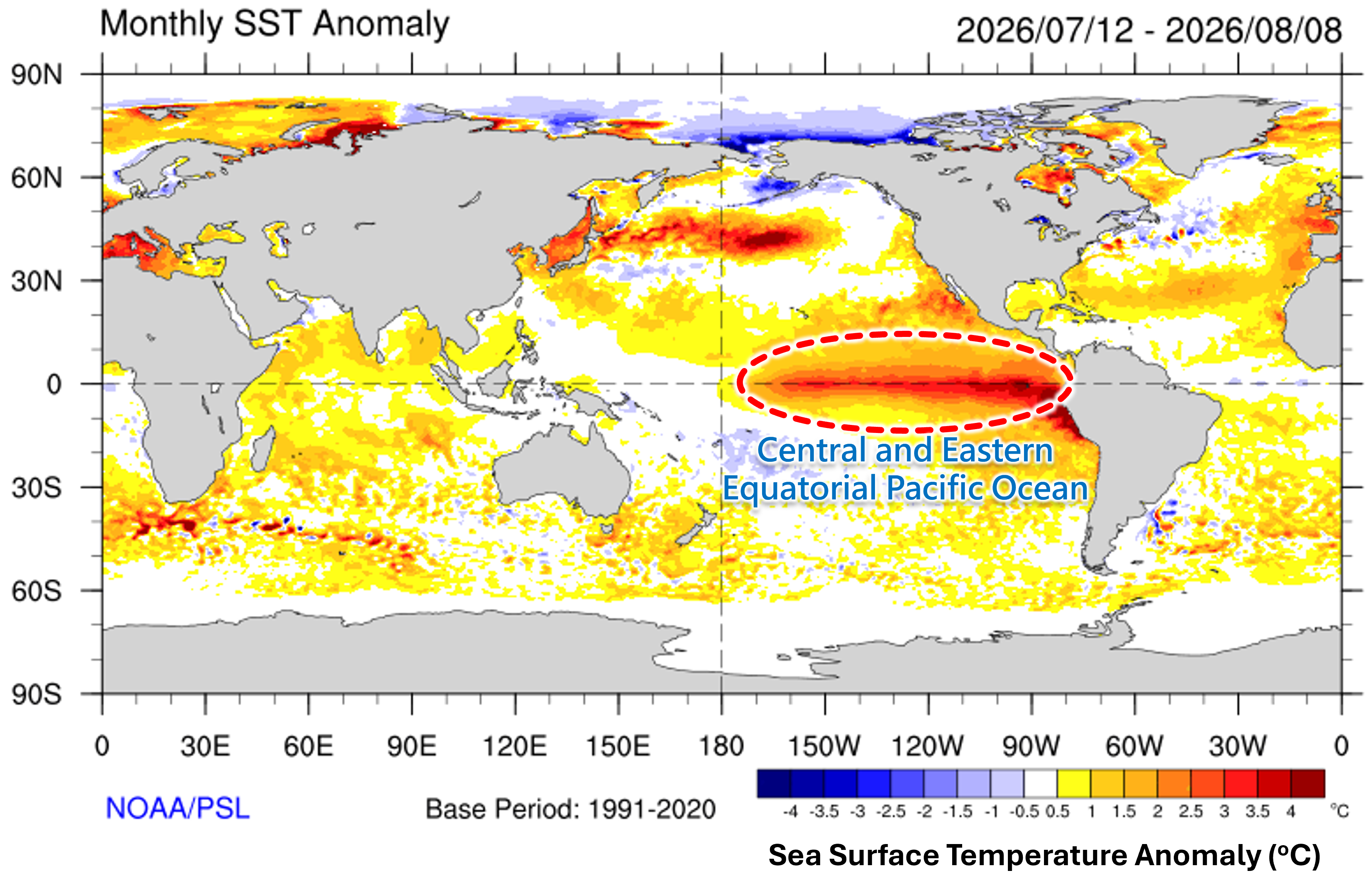
According to the latest ocean observation data, there has been a significant temperature rise in the central and eastern equatorial Pacific over the past two to three months, reflecting a gradually increasing chance of a "Very Strong El Niño" developing. El Niño's intensity is expected to peak between November and December this year, and it will persist at least until early next year. Under the combined effect of global warming and the Very Strong El Niño, the chance of extreme weather events will further increase.
The average temperature in Hong Kong this year and next year (2026 and 2027) is expected to be significantly above normal, with potential record-breaking high temperatures.
During El Niño, the average formation location of tropical cyclones over the western North Pacific shifts eastward, and tropical cyclones are more likely to turn northward over the western North Pacific. However, as they absorb heat energy over the sea for a longer duration, the chance of developing into super typhoons increases.
El Niño generally brings more rainfall to Hong Kong during winter and spring, while there is no significant trend of being above or below normal in other seasons.
The Observatory will closely monitor the latest situation of El Niño. Please stay tuned to the weather information published by the Observatory, and prepare for heat and other extreme weather.
Click here to learn more about the latest situation with and further information on El Niño.
Sea Surface Temperature (SST) Anomaly map from 12 July to 8 August 2026, showing warm water extensively covering the central and eastern equatorial Pacific, reflecting the fact an El Niño is developing.
(Image source:NOAA Physical Sciences Laboratory)