Sea Breeze will Affect the Direction of Aircraft Take-off and Landing
Sea Breeze will Affect the Direction of Aircraft Take-off and Landing
CHAN Yan-chun
February 2026
When you're travelling abroad or returning to Hong Kong, have you ever noticed the take-off and landing direction of aircraft on the runway? Sometimes they head towards the east, but sometimes towards the west. What is the reason for this?
The direction an aircraft takes during departure and arrival primarily depends on the wind direction along the runway at that moment. The three runways at the Hong Kong International Airport are oriented from east-northeast to west-southwest and are designated as Runway 07 and Runway 25, representing their magnetic headings which the runways face respectively. Runway 07 points to 70° in compass bearing (east-northeast), while Runway 25 points towards 250° in compass bearing (west-southwest). When Runway 07 is in use, aircraft will take off and land facing east-northeast; when Runway 25 is in use, aircraft will take off and land facing west-southwest. Pilots prefer take-off and landing against the winds, meaning the aircraft flies with the wind blowing towards its nose. According to aerodynamic principles, headwind increases the airflow over the wings during take-off, generating greater lift and effectively shortening the take-off roll. Landing into a headwind also allows for a lower ground speed, thereby reducing the landing roll distance and significantly enhancing safety.
The Hong Kong International Airport, located at Chek Lap Kok Island, is surrounded by the sea on three sides. During the day, the airport warms up by day heating, increasing the temperature difference with the Pearl River Estuary to the west and triggering a sea breeze. Under fine weather and light wind conditions with generally easterly background winds, a westerly sea breeze onsets from the shore and gradually affects the runway. In some cases, the wind direction can shift completely westerly across the entire runway (Figure 1). Under westerly winds, aircraft will take off and land on Runway 25 to take advantage of the headwind. Due to the wind direction changes caused by sea breeze during the day, runway operations may need to be switched from Runway 07 to Runway 25. When the sea breeze retreats in the evening, the wind direction gradually returns to the background easterly, and the runway orientation may need to be changed again.
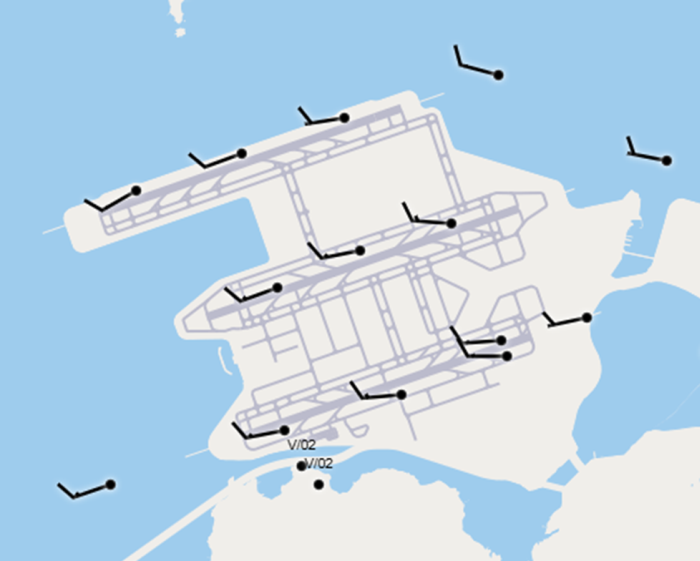
Figure 1 Westerly winds at the airport under sea breeze effect.
Accurately predicting the wind direction is crucial for airport operations, regardless of whether the weather is clear or affected by adverse conditions. The Hong Kong Observatory has been providing professional meteorological services to the aviation community. In recent years, artificial intelligence techniques have been adopted to assess the probability of westerly sea breeze establishment through machine learning models (Figure 2), assisting aviation forecasters in making more accurate judgments. These probabilistic forecasts also enable aviation stakeholders to conduct appropriate assessments, helping them understand the uncertainties in weather forecasts and contributing to the enhancement of aviation safety.
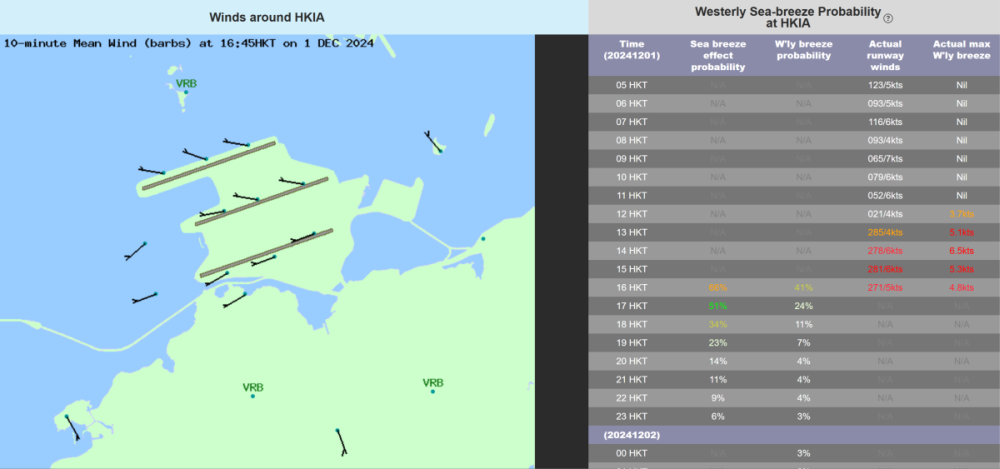
Figure 2 Observatory’s forecast model provides probability of sea breeze or westerly winds at the airport.