The Observatory launched balloon with frostpoint hygrometer to measure upper-air water vapour content for the first time
31 December 2020
David HY Lam Olivia SM LeeThe Hong Kong Observatory (HKO) launched balloon at the King’s Park Upper-air Meteorological Station for the first time in 2020 to measure the variation of water vapour content in the upper atmosphere. The station has become a GRUAN candidate site of the World Meteorological Organization (WMO). GRUAN stands for Global Climate Observing System Reference Upper-Air Network. The objective of WMO’s establishment of this network is to provide long-term and high-quality upper-air climate data to the meteorological community for the study of trends and variations of upper-air meteorological data. The data is also useful in numerical weather model analysis, as well as calibration and validation of satellite observations.
Collecting accurate upper-air water vapour observation data is a key responsibility of GRUAN members. In this connection, the Observatory acquired a Cryogenic Frostpoint Hygrometer (CFH), which can be tied to a weather balloon for the upper-air observations. As compared with traditional radiosonde, even at high altitudes with extremely low humidity, CFH can quickly and accurately measure the frostpoint temperature in the atmosphere, from which the water vapour content can be calculated (The commonly used term “relative humidity” represents how close the water vapour content is to saturation in the air and its value will change with temperature). However, coolant at -80 degrees Celsius is needed to keep the low temperature environment for the normal operation of the hygrometer. Hence special care has to be taken when filling in the coolant to the instrument before the balloon launch (Video 1).
Video 1: Initially, coolant is filled to keep the CFH at low temperature. Then the balloon is released to collect the data.
After the balloon is launched, the CFH gradually rises with the balloon to the stratosphere about 30 kilometers above ground. Frostpoint temperature is measured instantly during the flight and the water vapour content information can be accurately obtained after processing.
The Observatory launched the CFH on a monthly basis as required since October 2020. Figure 1 shows the data obtained from the most recent launch. The Observatory will continue to launch the balloon carrying CFH once a month to provide long-term and reliable atmospheric water vapour content data for analysis and archival by the GRUAN Lead Centre in Germany.
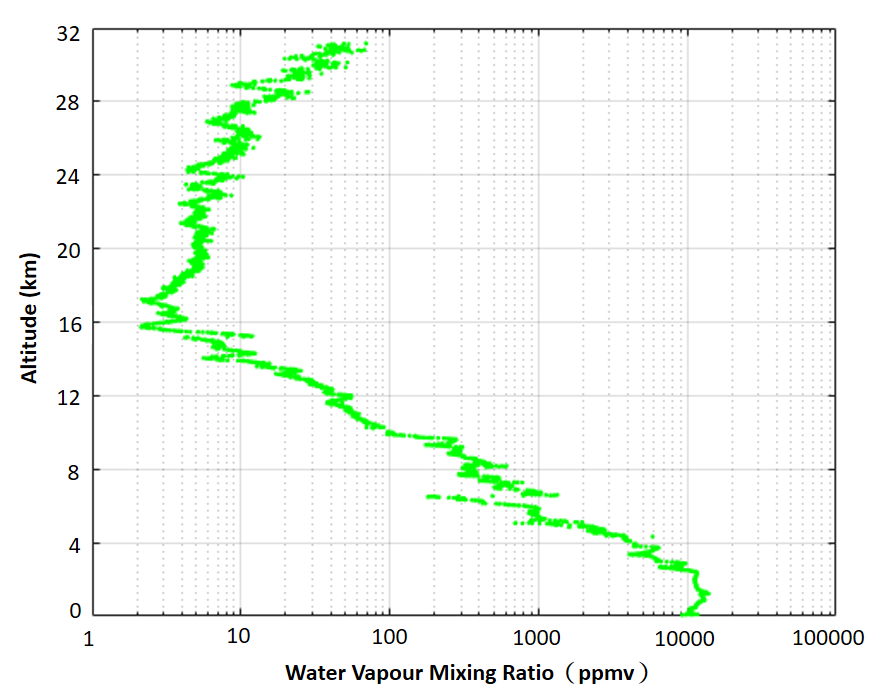
Figure 1 Variation of water vapour content with height on 17 December 2020